


How to Stay Calm in Hard Gospel Conversations: 5 Keys
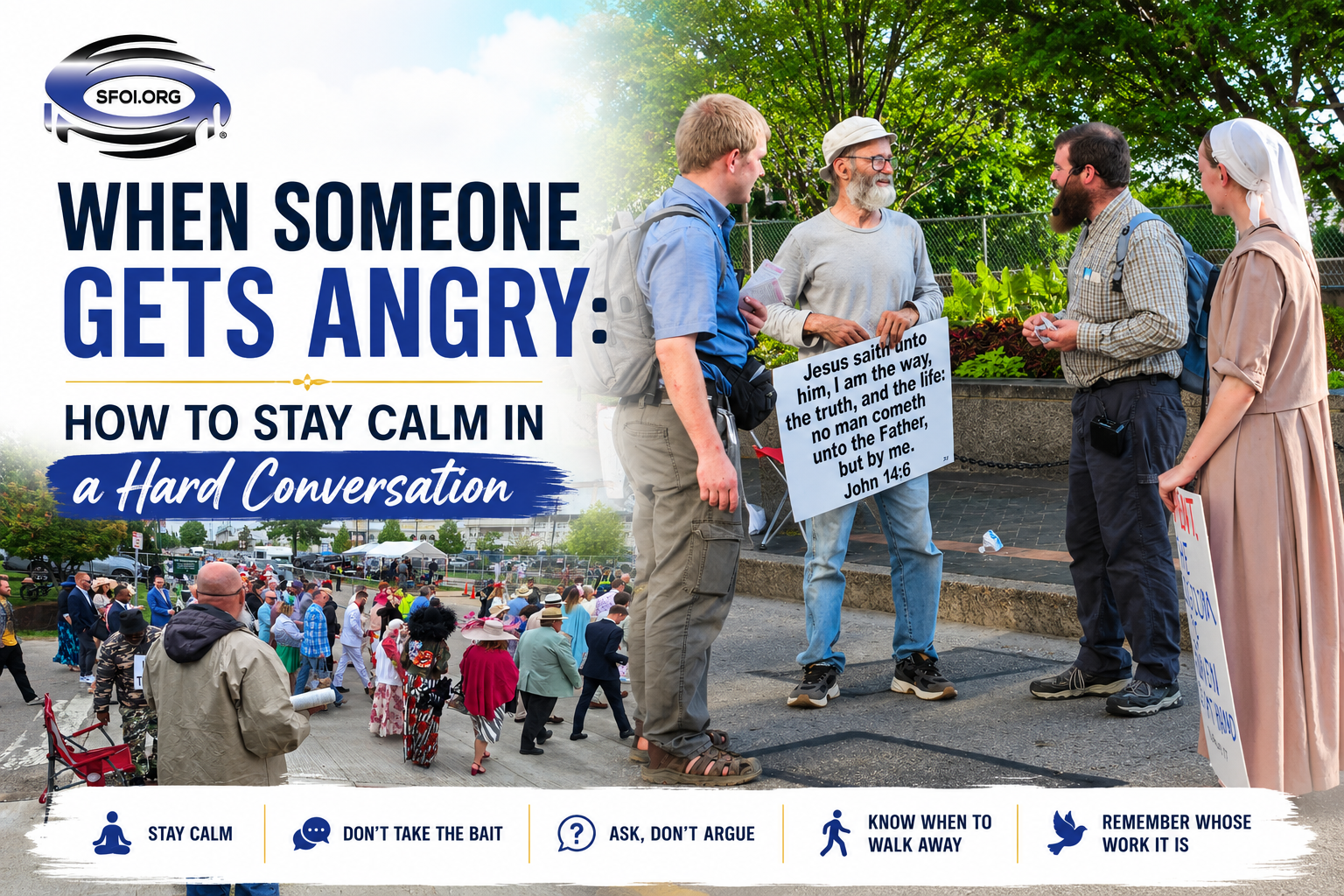
One of the most common reasons people avoid sharing their faith in public is the fear of hostility. What if someone yells? What if someone curses at me? What if I cannot answer their question?
It is an honest fear, and we will not pretend it is baseless. Our teams have been mocked, cursed at, and argued with. At our 2025 Bonnaroo outreach, evangelists preached through three days of thrown water bottles and shouted blasphemy — and one of the young men who stood at the edge of that hostile crowd walked up afterward and asked for a Bible.
That story, told in full in Stadium Evangelism Stories, captures the two truths every evangelist eventually learns: hostility is real, and hostility is rarer than you think. After thousands of conversations at games, festivals, and race weekends, we can also add a third: it is easier to handle than you fear. Here is how.

1. Stay Still
The instinct when someone gets loud is to match their energy. Do not.
Lower your voice instead of raising it. Slow your speech. Keep your hands open, not gesturing. Plant your feet and stay relaxed. Anger is looking for an opponent, and a calm presence refuses to be one. You will be surprised how often a person who arrived shouting is speaking at normal volume ninety seconds later — not because you argued them down, but because you gave their anger nothing to push against.
This is a skill, not a personality trait. Quiet people and fiery people can both learn it. It is the first thing worth practicing, because everything else on this list depends on it.
2. Don't Take the Bait
People who are upset often want a fight. They will say something inflammatory and wait for you to react. You do not have to react.
You can simply say, "I hear you. That's a fair frustration." Acknowledge the feeling before you respond to the content. This is not agreeing with them — it is honoring the person while declining the fight. You will be amazed how much heat leaves a conversation the moment someone realizes you are not going to swing back.
3. Ask — Don't Argue
When someone challenges you, try a question instead of a defense. "Why do you say that?" "What happened that makes you feel that way?"
Here is what those questions uncover, almost every time: most anger at Christians is rooted in a real story. A hypocritical church. A wound from a believer. A funeral where God felt absent. The person in front of you is rarely angry at a doctrine — they are angry at a memory. And the story matters more than the argument. When you listen to the story, you are often the first Christian who ever has. That alone changes conversations no debate could.
4. Know When to Walk Away
Not every conversation should continue. If someone is escalating, threatening, or clearly not in a place to talk, bless them and step back: "Hey, I can tell this isn't the right time. I appreciate you talking with me."
That is not a failure. That is wisdom. Scripture never commands you to win every exchange; it commands you to be faithful and to be wise as a serpent, gentle as a dove. Walking away well keeps the door open for the next evangelist that person meets — and closes it for the enemy who wanted the encounter to end in a scene.
5. Remember Whose Work It Is

You are not the Holy Spirit. You are a messenger.
You can plant a seed even in soil that looks like rock — and you have no idea what that soil has already been through. The man cursing at you today may be the man reading a tract alone next month. The woman who walked off mid-sentence may repeat your question to herself for a year. What happens next is not your responsibility. Only your faithfulness is.
This is the truth that lets our evangelists sleep after hard days. It can carry you through hard conversations too.
The Fear Loses Its Grip
The fear of hostility is one of the enemy's most effective weapons against evangelism — it silences believers before a single word is spoken. But once you have walked through a hard conversation a few times and come out the other side, the fear loses its grip. Most people are kinder than the internet makes you think. And the hard ones? They are often the ones carrying the heaviest stories.
If you have not started having these conversations yet, begin with our companion post on how to open a Gospel conversation — the five lines there are how most hard conversations are avoided entirely, because a conversation that starts with genuine interest rarely turns hostile.
Get Trained for the Hard Moments
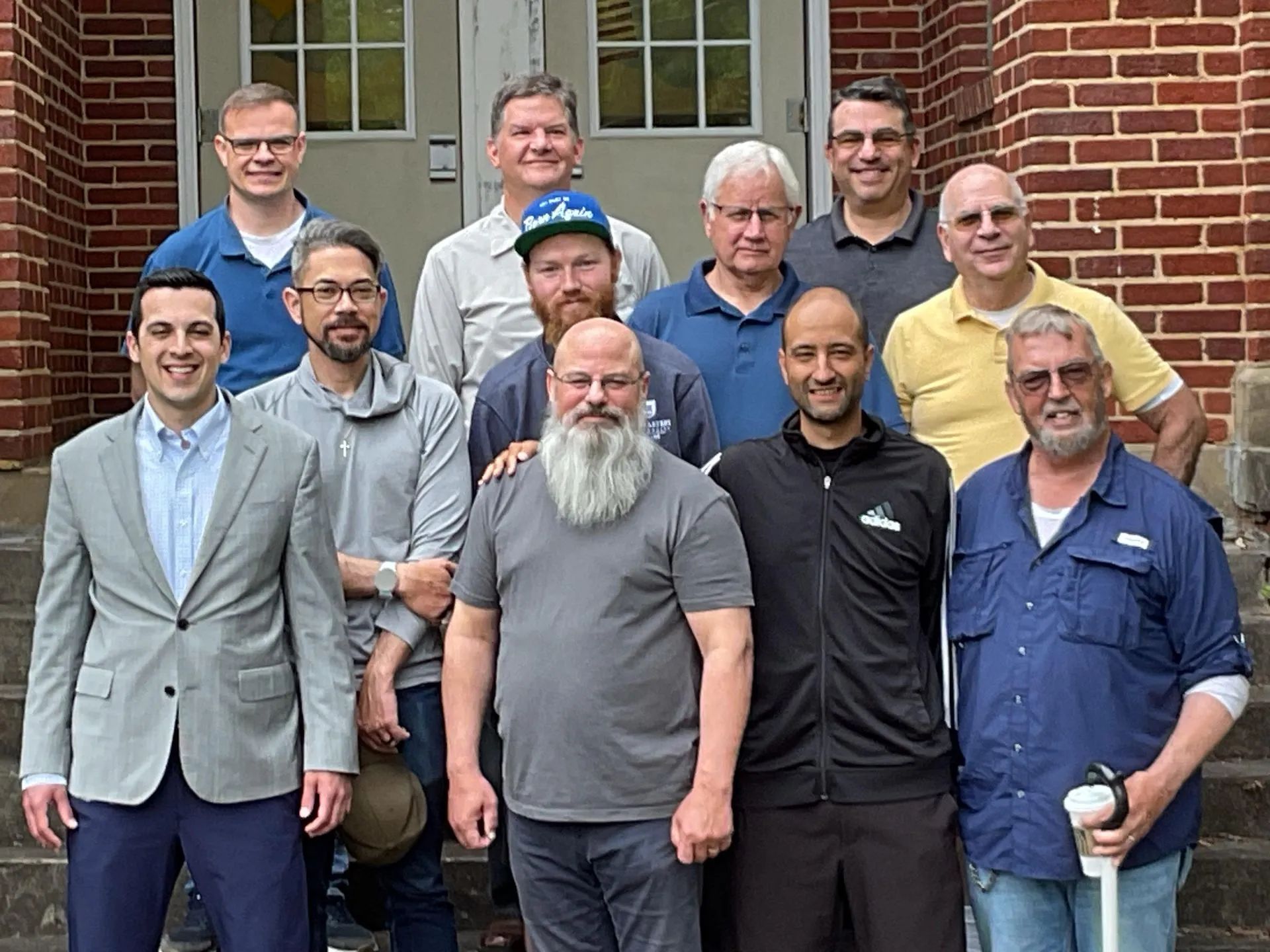
Reading about staying calm is one thing. Role-playing a hostile encounter with a veteran evangelist playing the heckler — then debriefing it together — is another. Handling hostility is a full training day at the SFOI Evangelist Boot Camp, alongside open-air preaching, one-on-one conversations, and tract writing. You will walk into your first hard conversation having already survived a dozen practice ones.
Learn more and register at
sfoi.org/sfoi-evangelist-boot-camp, and see where our teams are headed next at
sfoi.org/events.